Sustainable Commercial Landscaping: Water Conservation and Native Plant Strategies
Sustainable commercial landscaping is no longer a nice-to-have. For property managers facing rising water costs, tightening irrigation restrictions, and ESG reporting requirements, it has become a financial and compliance priority. Done well, it lowers water and chemical spending, reduces maintenance labor, and supports green building certifications that tenants increasingly expect. This guide is written for HOA boards, commercial property managers, and developers across the Southeast who want to cut resource use without sacrificing curb appeal. You will learn how native plants, smart water management, and reduced chemical inputs work together, plus how to measure the impact and translate it into certifications and cost savings.
Key Takeaways
- Sustainable commercial landscaping reduces water use, chemical inputs, and maintenance labor while supporting ESG and green building goals.
- Landscape irrigation accounts for a large share of commercial water use; the U.S. Environmental Protection Agency estimates outdoor water use nationally at nearly 9 billion gallons per day, much of it from landscape irrigation.
- Native and Florida-Friendly plants cut irrigation and fertilizer needs once established.
- Integrated pest management reduces chemical inputs while keeping landscapes healthy.
- Sustainable landscapes can contribute credits toward LEED and SITES certifications.
Why Sustainability Now Drives Commercial Landscape Decisions
Three forces are pushing sustainability to the top of the commercial landscape agenda. First, water is getting more expensive and more regulated, especially in Florida where water management districts set watering-day restrictions. Second, corporate ESG commitments and green building certifications increasingly influence which properties attract premium tenants. Third, labor and material costs make the low-maintenance nature of sustainable design attractive on its own.
The U.S. Environmental Protection Agency estimates that landscape irrigation accounts for a large portion of the nearly 9 billion gallons of water used outdoors each day nationally, and that a meaningful share of that is wasted through inefficient watering. For a large commercial property or HOA, trimming that waste is a direct budget win.
United Land Services brings Southeast climate expertise and vertical integration, including our own sod farm, to sustainable programs. That lets us match turf and plant material to each site’s conditions rather than defaulting to thirsty, high-input choices. Our landscape design and installation team builds sustainability into the plan from the start.
Native and Adapted Plants: The Foundation of a Sustainable Landscape
The fastest route to a lower-input landscape is choosing plants suited to the local climate and soil. Native and regionally adapted species evolved to thrive on natural rainfall and existing soils once established, which means less irrigation, less fertilizer, and fewer pest problems.
Benefits of Native Plants for Commercial Properties
- Water savings: established natives need far less supplemental irrigation than exotic ornamentals.
- Lower fertilizer needs: adapted plants perform on native soil fertility, reducing chemical inputs and runoff.
- Pest resistance: natives tolerate local pests and diseases better, reducing pesticide use.
- Habitat value: native plantings support pollinators and wildlife, a visible sustainability story for tenants.
The University of Florida IFAS Extension promotes the Florida-Friendly Landscaping program, which provides research-based guidance on right plant, right place, efficient watering, and fertilizing appropriately. These principles translate directly to lower operating costs on commercial sites.
Matching Plants to the Southeast’s Zones
Sustainable planting is regional. Coastal sites need salt tolerance, inland sites need heat and drought tolerance, and shaded campuses need low-light-adapted species. Because United Land Services operates across Florida, Georgia, Alabama, and the Carolinas, we select plant palettes tuned to each market rather than applying one list everywhere.
Water Conservation Strategies That Cut Costs
Water is usually the largest single resource cost in commercial landscaping, which makes it the highest-leverage place to improve sustainability.
Smart Irrigation Technology
Weather-based controllers, soil moisture sensors, and flow monitoring adjust watering to actual conditions instead of a fixed clock. The EPA WaterSense program reports that weather-based irrigation controllers can save significant water by matching irrigation to local weather and landscape needs. On a large property, that efficiency shows up quickly on the utility bill. Our smart irrigation and water management service is included in maintenance packages precisely because it protects both plants and budgets.
Drought-Tolerant Turf and Reduced Turf Areas
Turf is the thirstiest part of most commercial landscapes. Two strategies help: selecting drought-tolerant grass species suited to the region, and reducing turf in low-use areas by replacing it with native beds, mulch, or hardscape. Our sod installation team can specify turf varieties matched to each site’s sun, traffic, and water profile.
Mulching, Rain Gardens, and Bioswales
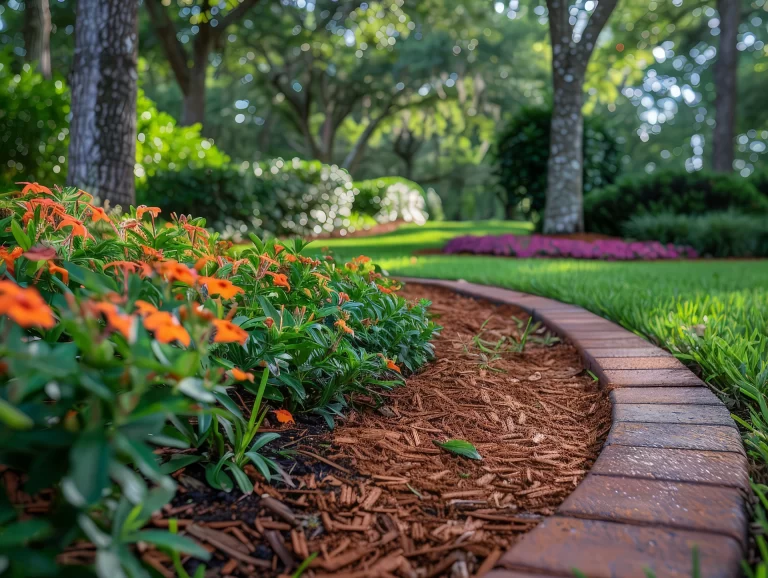
A 2-to-3-inch mulch layer conserves soil moisture, moderates temperature, and suppresses weeds, cutting both irrigation and herbicide needs. Rain gardens and bioswales capture stormwater on site, reduce runoff, and recharge the landscape, aligning with the same green-infrastructure goals the EPA promotes for stormwater management.
Reducing Chemical Inputs and Maintenance Impact
Sustainability extends beyond water to the chemicals and equipment used to maintain a property.
Integrated Pest Management
Integrated pest management (IPM) uses monitoring, thresholds, and targeted treatment instead of blanket spraying. Problems are caught early and treated with the least-intensive effective method. The result is healthier plants, lower chemical costs, and reduced runoff into local waterways. Florida’s fertilizer regulations, including summer blackout periods in many counties, make disciplined nutrient management essential, and IPM fits naturally within that framework.
Sustainable Maintenance Practices
- Recycling grass clippings and mulching leaves to return nutrients to the soil.
- Composting green waste rather than hauling it off.
- Using battery-electric equipment where practical to cut emissions and noise.
- Right-sizing mowing frequency and height to build stronger, more drought-resilient turf.
Our year-round maintenance programs can incorporate these practices across an entire portfolio, keeping standards consistent from one property to the next.
Measuring Impact and Earning Certifications
Sustainability that cannot be measured is hard to defend in a budget meeting or an ESG report. The good news is that landscape improvements produce trackable results.
Metrics That Matter
- Water use: gallons and dollars saved after smart irrigation and turf reduction.
- Chemical reduction: pounds of fertilizer and pesticide applied year over year.
- Green waste diverted: volume composted or mulched on site rather than landfilled.
Green Building Certifications
Sustainable landscaping can contribute to recognized certifications that raise property value and tenant appeal. The U.S. Green Building Council’s LEED rating system awards credits for water-efficient landscaping and reduced potable water use for irrigation. The SITES rating system specifically recognizes sustainable land design and management. For owners pursuing these credentials, the landscape is one of the more cost-effective places to earn points.
To see how these strategies come together on real commercial properties, our project portfolio shows the scale at which we operate.
Frequently Asked Questions
Does sustainable commercial landscaping cost more?
Upfront, some sustainable choices cost more, such as smart irrigation controllers or native plant installations. But they typically lower ongoing costs through reduced water, fertilizer, pesticide, and maintenance labor. Over a multi-year horizon, sustainable landscapes often cost less to operate than conventional high-input designs, which is why many commercial owners now favor them.
How much water can smart irrigation save?
Savings vary by site, but the EPA WaterSense program reports that weather-based irrigation controllers can significantly reduce outdoor water use by matching watering to actual weather and landscape needs. On large commercial properties and HOAs, where irrigation is the biggest water cost, those percentage savings translate into substantial annual dollar reductions.
Are native plants less attractive than traditional ornamentals?
No. Native and Florida-Friendly plant palettes can be designed for year-round color, texture, and structure that rival conventional plantings. They also support pollinators and wildlife, adding a visible sustainability story. The key is thoughtful design, which is why matching the right native species to each site’s conditions matters as much as the plant list itself.
Can sustainable landscaping help with LEED certification?
Yes. The U.S. Green Building Council’s LEED system awards credits for water-efficient landscaping and reduced potable water use for irrigation, among other landscape-related measures. The SITES rating system recognizes sustainable site design and management more comprehensively. Landscape improvements are often a cost-effective way to earn points toward these certifications.
What is integrated pest management?
Integrated pest management, or IPM, is a strategy that relies on monitoring, action thresholds, and targeted treatment rather than routine blanket spraying. It catches pest problems early and treats them with the least-intensive effective method. The result is healthier landscapes, lower chemical costs, and reduced runoff into local waterways.
Conclusion
Sustainable commercial landscaping delivers on both the balance sheet and the ESG report. Native and adapted plants cut water and fertilizer needs, smart irrigation and turf reduction slash the largest resource cost, integrated pest management lowers chemical inputs, and the whole program can contribute to LEED and SITES certifications that raise property value. For Southeast properties facing rising water costs and tightening restrictions, these strategies are as much about protecting the budget as protecting the environment. United Land Services combines Southeast climate expertise, vertical integration, and top-20 national resources to build measurable sustainable programs. To lower your resource costs and strengthen your sustainability story, request a consultation from United Land Services.