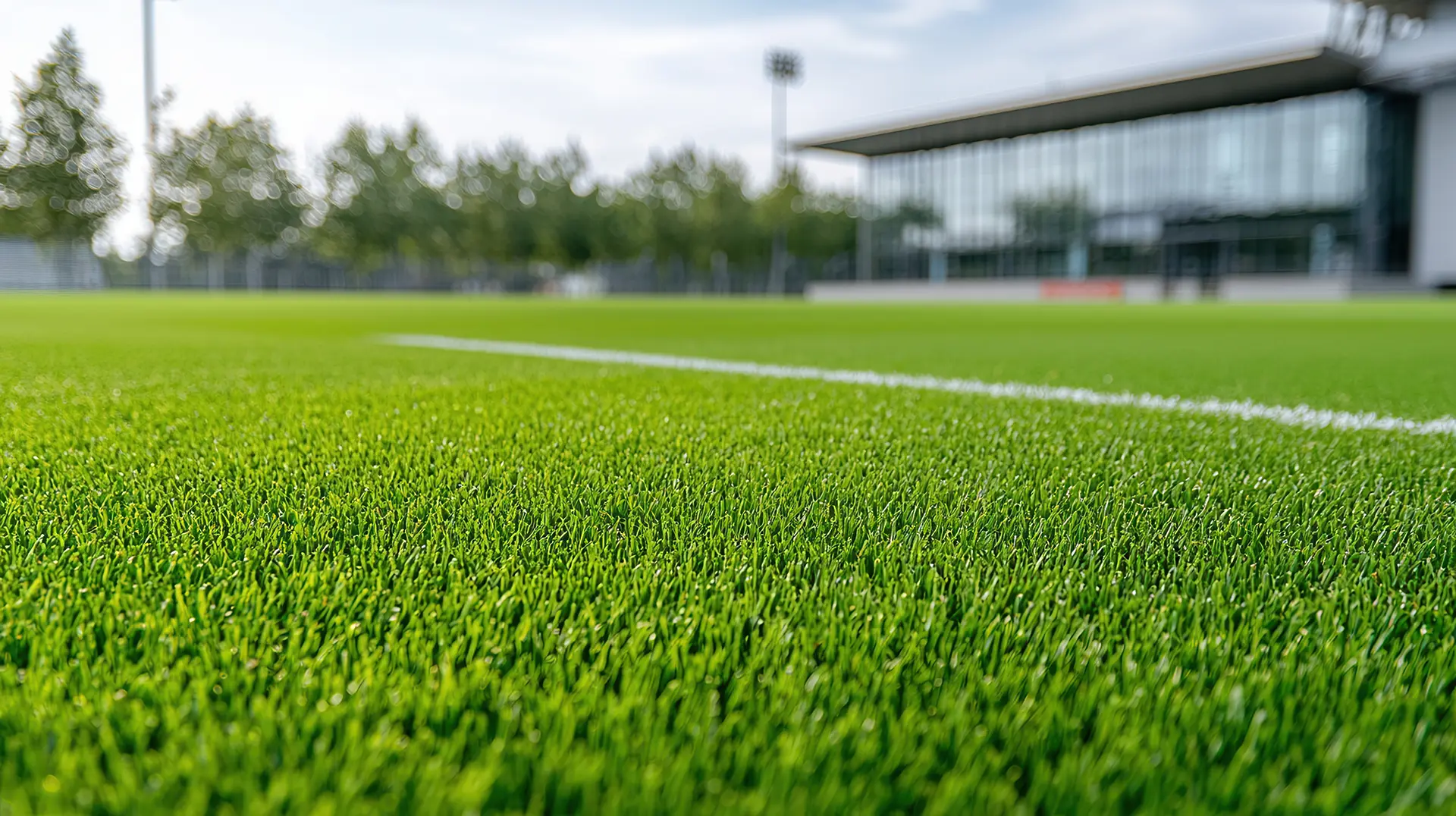
Sports Field Maintenance: How to Keep Athletic Turf at Championship Levels
A poorly maintained athletic field is more than an eyesore. It is a liability, an injury risk, and a reflection of the organization that owns it. Whether you manage a municipal recreation complex, a school district’s football stadium, or a community sports facility with multi-use fields, sports field maintenance is the single biggest factor in field safety, playability, and longevity.
Athletic turf takes a beating that ordinary commercial lawns never experience. Cleats tear at the crown. Goal mouths compact into hardpan. Slide zones lose turf entirely. Without a professional-grade maintenance program designed for these conditions, fields deteriorate quickly – and the cost of full renovation far exceeds the cost of consistent upkeep.
This guide covers every component of a championship-level sports field maintenance program, from mowing heights and aeration schedules to seasonal care calendars and the difference between basic upkeep and professional-grade turf management.
What Makes Sports Turf Different from Commercial Landscaping
Standard commercial landscape maintenance focuses on appearance: clean edges, healthy color, and consistent growth. Sports turf management adds three additional dimensions that change everything about how the turf is maintained.
Traffic Intensity and Patterns
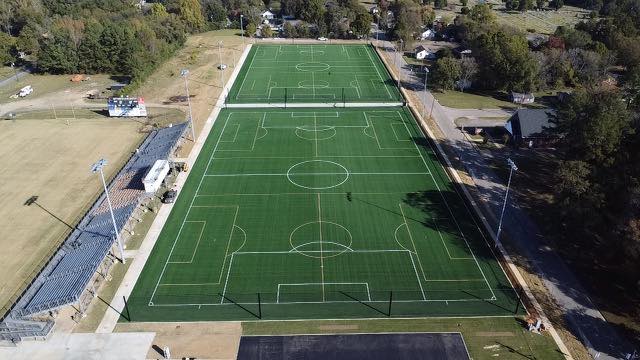
A typical commercial lawn may receive foot traffic from pedestrians walking to a building entrance. A football field absorbs concentrated impact from 22 athletes wearing cleats, repeatedly, in the same zones – hash marks, sidelines, and between the 40-yard lines. Soccer fields see similar abuse in front of goals, in the center circle, and along the touchlines. Baseball infields endure sliding and pivoting that strips turf to bare soil.
This level of use compacts soil, destroys root systems, and creates uneven surfaces far faster than any commercial property experiences.
Safety Requirements
An uneven playing surface causes ankle sprains, ACL tears, and concussions from unexpected falls. The Sports Turf Managers Association (STMA) identifies field hardness, surface evenness, traction, and moisture content as measurable safety factors that require ongoing monitoring and management. According to STMA field quality standards, a professionally managed athletic field should meet specific thresholds for surface firmness, footing stability, and turf density to reduce athlete injury risk.
Sports field maintenance is not just about appearance. It is about player safety at every practice and every game.
Appearance Standards
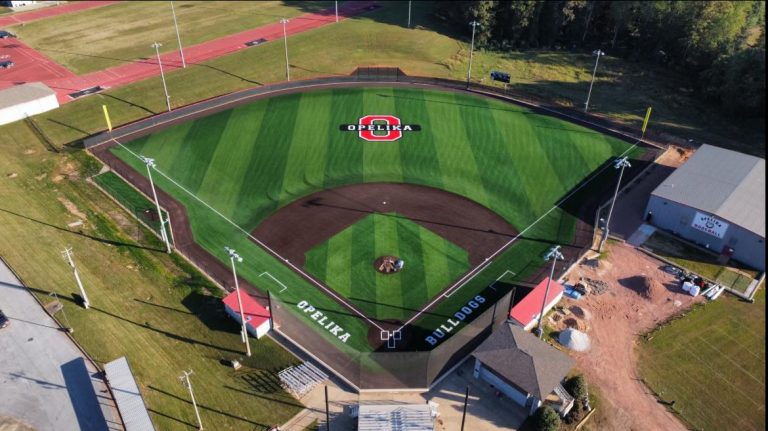
Competition fields are held to a visual standard that goes beyond “green and mowed.” Striping patterns must be precise. Turf color must be uniform. Logos and field markings require turf that is dense, consistent, and free of weeds, bare spots, or discoloration. For facilities hosting televised or high-profile events, field appearance directly reflects the quality of the program.
Core Components of Professional Sports Field Maintenance
A complete sports field maintenance program includes seven interconnected components. Neglecting any one of them undermines the others.
Mowing at Sport-Specific Heights
Mowing is the most frequent maintenance task, and the height of cut matters more on athletic fields than on any other turf application. Cutting too low weakens root systems and invites weed invasion. Cutting too high reduces playability, slows ball roll, and creates inconsistent footing.
The following table shows recommended mowing heights for warm-season Bermudagrass, the dominant sports turf species across the Southeast.
| Sport / Field Type | Recommended Mowing Height | Mowing Frequency (Growing Season) | Notes |
|---|---|---|---|
| Football | 1.0 – 1.5 inches | 2 – 3 times per week | Lower height for game day, higher during recovery periods |
| Soccer | 0.75 – 1.5 inches | 2 – 3 times per week | Lower end for competitive play; higher for practice fields |
| Baseball Outfield | 1.0 – 1.5 inches | 2 – 3 times per week | Consistent height ensures true ball roll |
| Baseball Infield Turf | 0.75 – 1.0 inches | 3 – 4 times per week | Tight cut for visibility and play speed |
| Multi-Use / Recreation | 1.5 – 2.0 inches | 1 – 2 times per week | Higher tolerance allows recovery between varied uses |
| Practice Fields | 1.5 – 2.0 inches | 2 times per week | Prioritize turf health and root depth over aesthetics |
Mowing should follow the one-third rule: never remove more than one-third of the leaf blade in a single cut. During peak growing season in the Southeast (May through September), this means mowing two to three times per week at minimum for competition surfaces.
Aeration and Soil Decompaction
Compacted soil is the silent killer of athletic fields. Heavy foot traffic drives soil particles together, eliminating the air space that roots need to grow. Without regular aeration, even well-fertilized turf will thin, weaken, and become susceptible to disease.
Professional sports turf management programs use multiple aeration methods:
- Core aeration removes soil plugs to relieve compaction and improve water infiltration. Performed 2 to 4 times per year on heavily used fields.
- Solid tine aeration punches holes without removing soil. Used more frequently – monthly during the growing season – with minimal surface disruption.
- Deep tine aeration reaches 8 to 12 inches below the surface to break up compaction layers that standard aerators cannot reach. Typically performed once or twice annually.
The NCAA Facility Operations Manual recommends that high-use athletic fields receive a minimum of two core aerations per year, with supplemental solid tine work throughout the playing season.
Overseeding Programs
In the Southeast, warm-season Bermudagrass goes dormant during winter, turning brown and leaving fields vulnerable to wear and erosion during fall and winter sports seasons. Overseeding with perennial ryegrass in early fall maintains green, playable turf through football and soccer seasons.
A proper overseeding program requires careful timing. Seed too early while Bermuda is still actively growing and the competition will smother the ryegrass. Seed too late and the ryegrass will not establish before cold weather arrives. In most Southeast markets, the window falls between mid-September and mid-October.
Spring transition – managing the shift back from ryegrass to Bermuda – is equally important. This process requires gradually lowering mowing heights, reducing irrigation, and allowing the Bermuda to outcompete the ryegrass as temperatures rise.
Soil Testing and Fertilization
Athletic fields require more aggressive fertilization than standard commercial turf because of the constant stress they endure. But effective fertilization starts with soil testing, not guesswork.
Soil tests should be conducted at least twice per year (spring and fall) to measure pH, macronutrient levels (nitrogen, phosphorus, potassium), and micronutrient availability. The University of Georgia Extension’s sports turf management resources recommend maintaining soil pH between 6.0 and 6.5 for Bermudagrass athletic fields.
A typical Bermudagrass sports field in the Southeast needs 4 to 6 pounds of nitrogen per 1,000 square feet annually, applied in split applications throughout the growing season. Fertilization rates should be adjusted based on soil test results, not applied on a one-size-fits-all schedule.
Integrated Pest Management
Athletic fields face targeted pest pressure. Armyworms, mole crickets, white grubs, and sod webworms are common warm-season turf pests across Florida, Georgia, and the Carolinas. Large patch disease and dollar spot are the primary fungal threats during transitional seasons.
Professional pest management for sports turf follows integrated pest management (IPM) principles: monitor first, identify the specific threat, and apply targeted treatments rather than blanket applications. Regular scouting and threshold-based treatment protect turf health while minimizing chemical inputs – an important consideration for fields used by youth athletes.
Irrigation Management
Athletic fields need consistent, precise irrigation to maintain playability and turf density. Too little water stresses turf and slows recovery from wear. Too much encourages disease, softens the playing surface, and creates unsafe footing.
A properly designed irrigation system for sports fields should deliver uniform coverage across the entire playing surface with head-to-head spacing. Smart controllers that adjust run times based on weather data and soil moisture sensors eliminate overwatering while ensuring turf receives adequate hydration during the Southeast’s intense summer heat.
Most sports fields require 1 to 1.5 inches of water per week during the growing season, applied in early-morning cycles to minimize evaporation and reduce disease risk.
Seasonal Sports Field Maintenance Calendar
Sports turf management follows a year-round cycle. The following seasonal calendar is designed for warm-season Bermudagrass fields in Southeast climate zones (USDA Zones 8 – 10).
| Season | Months | Key Maintenance Activities |
|---|---|---|
| Early Spring | March – April | Begin mowing at lower heights to encourage Bermuda green-up. Apply pre-emergent herbicide for summer annual weeds. Conduct first soil test. Begin fertilization program (0.5 – 1 lb N/1,000 sq ft). Core aerate to relieve winter compaction. Inspect and activate irrigation systems. |
| Late Spring | May – June | Increase mowing frequency to 2 – 3 times per week. Apply second fertilizer application. Monitor for armyworm and mole cricket activity. Complete spring transition (remove remaining ryegrass if overseeded). Address any bare areas with sod installation or sprigging. Adjust irrigation schedules for rising temperatures. |
| Summer | July – August | Peak mowing frequency (3 times per week for competition fields). Continue split fertilizer applications. Monitor irrigation for uniform coverage and adjust for rainfall. Scout for large patch, dollar spot, and insect pressure. Solid tine aerate monthly to manage compaction from summer use. Raise mowing height slightly during extreme heat stress periods. |
| Early Fall | September – October | Overseed with perennial ryegrass for winter color and playability. Core aerate before overseeding. Conduct second soil test. Apply fall fertilizer based on test results. Reduce mowing height gradually to prepare Bermuda for dormancy. Begin pre-season field preparation for football and soccer. |
| Late Fall | November – December | Maintain ryegrass overseeding with regular mowing at 1.5 – 2.0 inches. Apply light fertilizer to ryegrass (0.5 lb N/1,000 sq ft monthly). Monitor drainage and address low spots before heavy winter rain. Reduce irrigation frequency as temperatures drop. Paint field markings for competition season. |
| Winter | January – February | Continue mowing ryegrass as needed. Perform equipment maintenance and calibration. Plan spring renovation work. Review soil test results and order amendments. Evaluate field performance from the fall season and identify priority repairs. Minimal irrigation – only as needed to prevent ryegrass stress. |
This calendar shifts slightly depending on your specific location within the Southeast. Fields in North Florida and the Carolinas will overseed earlier and begin spring green-up later than fields in Central and South Florida.
Field Renovation and Repair
Even the best-maintained fields eventually need renovation. Goal mouths, pitcher’s mounds, sideline areas, and high-traffic zones between the hash marks accumulate damage that weekly maintenance cannot fully address.
Professional field renovation includes:
- Sod replacement in high-wear areas using Bermudagrass varieties matched to the existing turf. United Land Services operates its own sod farm, giving facility managers direct access to quality-controlled sod installation on the timeline their schedule demands.
- Grade correction to restore surface evenness and proper drainage slope. Fields should maintain a crown or grade that moves surface water off the playing surface within 30 minutes of rain stopping.
- Complete turf renovation for fields that have deteriorated beyond the point of repair. This involves soil amendment, regrading, sprigging or sodding, and a 60 to 90-day establishment period before play resumes.
- Infield skin maintenance for baseball and softball fields, including lip management, proper clay composition, and nail drag patterns.
The cost of reactive renovation – waiting until a field fails – is three to five times higher than the cost of proactive maintenance that prevents failure in the first place.
Amateur vs. Professional-Grade Sports Field Maintenance
Many municipalities, school districts, and community organizations attempt to maintain athletic fields using the same crew and equipment they use for general grounds maintenance. While this approach reduces short-term costs, it creates long-term problems that are expensive to fix.
The differences between amateur and professional-grade maintenance are significant:
| Factor | General Grounds Approach | Professional Sports Turf Management |
|---|---|---|
| Mowing equipment | Standard rotary mowers | Reel mowers with adjustable bench height |
| Mowing height precision | Approximate | Measured to 1/16-inch increments |
| Aeration program | Once a year (if at all) | 2 – 4 core aerations plus monthly supplemental |
| Soil testing | Rarely performed | Twice annually minimum |
| Fertilization | Generic schedule and products | Custom program based on soil test results |
| Pest management | Reactive – treat after damage appears | Proactive IPM – scout, identify, threshold-treat |
| Overseeding | Spread seed and hope | Calibrated seeding rates, timing, establishment protocol |
| Irrigation management | Timer-based watering | Smart controllers with soil moisture feedback |
| Field safety monitoring | Visual inspection only | Surface hardness testing, evenness measurement, traction evaluation |
The gap between these two approaches shows up in turf quality within a single season and in field lifespan within three to five years.
Safety Considerations for Athletic Fields
Player safety is the non-negotiable standard for any sports field maintenance program. Facility managers carry a legal duty of care to provide a reasonably safe playing surface for athletes, spectators, and staff.
Key safety factors include:
Surface evenness. Depressions, ridges, and lips between turf and infield skin areas cause trips and falls. Regular topdressing and grade correction keep the surface smooth.
Proper drainage. Standing water on a field creates slip hazards and breeds mosquitoes. Fields should drain completely within one hour of a typical rain event. If they do not, the drainage system needs evaluation and repair.
Adequate traction. Turf that is too thin, too wet, or grown over a compacted base does not provide reliable footing. Athletes cannot plant, cut, or accelerate safely on surfaces that give way underfoot.
Goal and equipment anchoring. Unsecured goals, bases, and portable equipment create hazards that maintenance teams must address as part of their regular field inspection process.
Heat management. Bermudagrass fields in the Southeast can reach surface temperatures above 150 degrees Fahrenheit during summer afternoons. Proper irrigation timing and adequate turf density help moderate surface temperatures for safer play conditions.
Documentation matters. Facility managers should maintain logs of all maintenance activities, inspections, and repairs. These records demonstrate due diligence and protect the organization in the event of an injury claim.
Why United Land Services for Sports Field Maintenance
United Land Services has maintained sports turf expertise since the formation of its commercial landscaping platform in 2020. River Region Sports Fields was one of five founding acquisitions that created ULS, which means sports turf management has been embedded in the company’s DNA from day one – not added as an afterthought.
That expertise is backed by the resources of a top-20 national landscape company. With 30+ branches across six states and 1,600+ employees, ULS delivers the equipment, staffing depth, and technical knowledge that championship-level sports field maintenance demands. From soil testing and custom fertilization programs to irrigation management, sod production, and full field renovation, every component of athletic turf care is handled by professionals who specialize in high-performance playing surfaces.
ULS serves municipal recreation departments, school districts, community sports complexes, and HOA athletic amenities across the Southeast. If your fields are showing signs of wear, compaction, or inconsistent playability, a professional evaluation is the first step toward getting them back to game-ready condition.
Contact United Land Services at (904) 829-9255 or request a consultation online to discuss your sports field maintenance needs.